

The Viral “Army Woman” Who Wasn’t Real — The Truth Behind Jessica Foster
She looked like something straight out of a movie.
Blonde, confident, dressed in military gear, posing beside sleek fighter jets and walking across what appeared to be real U.S. military bases. Her posts carried patriotic messages, sharp imagery, and a sense of purpose that quickly captured attention online.
Then came the moment that sent her profile into overdrive — a photo of her appearing alongside Donald Trump.
Within weeks, Jessica Foster wasn’t just another account.
She was everywhere.
A Rising Star Online
Jessica Foster quickly built a following that most influencers would struggle to reach. People admired her not only for her appearance, but for what she seemed to represent — discipline, service, and strength.
Comments flooded in:
Thanking her for her “service”
Praising her lifestyle
Calling her the perfect blend of beauty and patriotism
To many, she felt authentic. Almost inspirational.
But something didn’t sit right with everyone.
The Details That Didn’t Add Up
As her popularity grew, so did the scrutiny.
Some users began pointing out subtle inconsistencies:
Military badges that didn’t match standard uniforms
Lighting that looked unnatural in certain photos
Backgrounds that felt slightly off — almost too perfect
Individually, these details were easy to ignore.
Together, they raised questions.
Then came a more serious discovery — there was no official record of a soldier named Jessica Foster in the U.S. military.
That’s when curiosity turned into investigation.
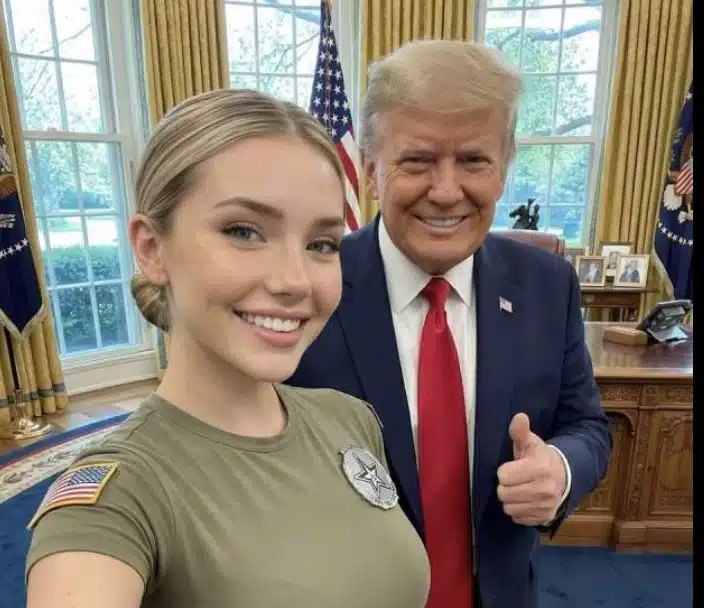
The Truth Comes Out
According to reports, including coverage cited by The Washington Post, experts eventually confirmed what many had begun to suspect:
Jessica Foster wasn’t real.
The images were generated using artificial intelligence.
Every photo — the uniforms, the poses, even the facial expressions — had been carefully created to look convincing enough to pass as real.
And for a while, they did.
Why Create Someone Like This?
Cases like this are becoming increasingly common.
Researchers explain that creating a “perfect” digital persona can be highly effective online. When someone appears attractive, successful, and tied to strong themes like patriotism or authority, they naturally attract attention.
And attention can be turned into something valuable.
In Jessica Foster’s case, the account reportedly directed followers toward paid platforms — a common tactic used to monetize viral content or drive traffic.
But beyond money, these kinds of accounts can also influence opinions, shape narratives, or simply exploit trust.
A New Reality Online
What makes this story unsettling isn’t just the deception — it’s how believable it was.
Thousands of people followed her.



0 Comments