

The farewell for Rev. Jesse Jackson drew some of the biggest names in American politics, but in the days after the memorial, attention shifted from the tributes themselves to the sharp criticism that followed.
Jackson, the longtime civil rights leader, died on February 17 at age 84 after years of serious health struggles. He had previously disclosed a Parkinson’s diagnosis in 2017, and the Rainbow PUSH Coalition said he had also been living with progressive supranuclear palsy, a degenerative brain disease that can severely affect movement, swallowing, and overall health. Over the course of his life, Jackson became one of the most recognizable figures of the civil rights movement, marched alongside Martin Luther King Jr., founded major activist organizations, and ran for the Democratic presidential nomination in both 1984 and 1988.
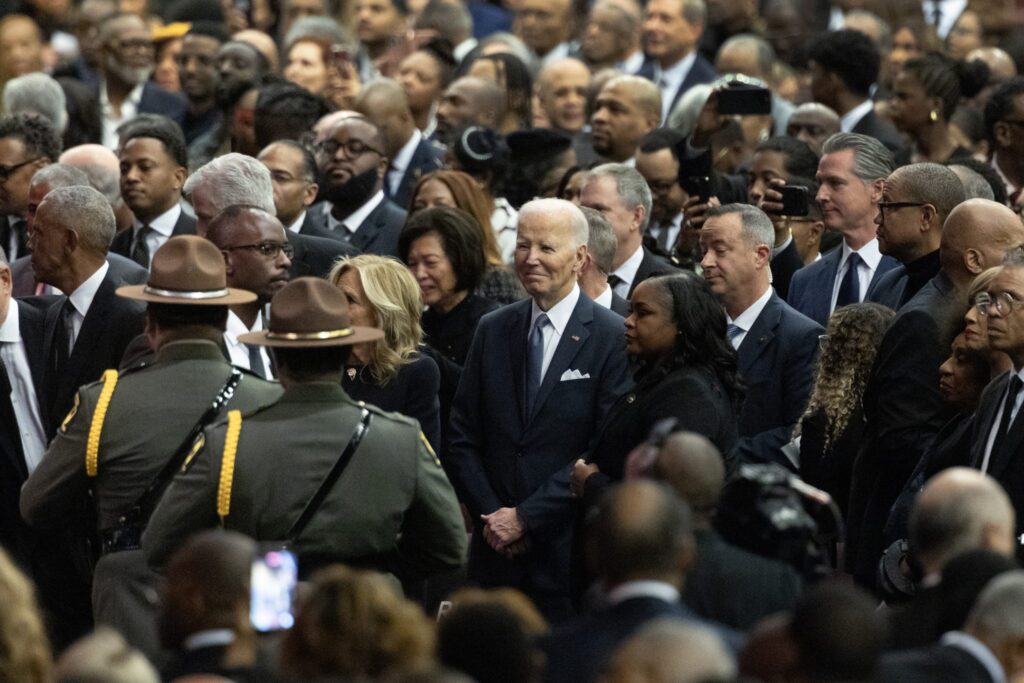
On March 6, thousands gathered at the House of Hope in Chicago for a public memorial celebrating his life. Among those in attendance were former Presidents Barack Obama, Joe Biden, and Bill Clinton, along with former Vice President Kamala Harris and other public figures who came to honor Jackson’s influence on politics, race, faith, and public life. Chicago outlets and Reuters described the service as a major public tribute, with speakers reflecting on Jackson as a pathbreaking force who changed the direction of American political life.

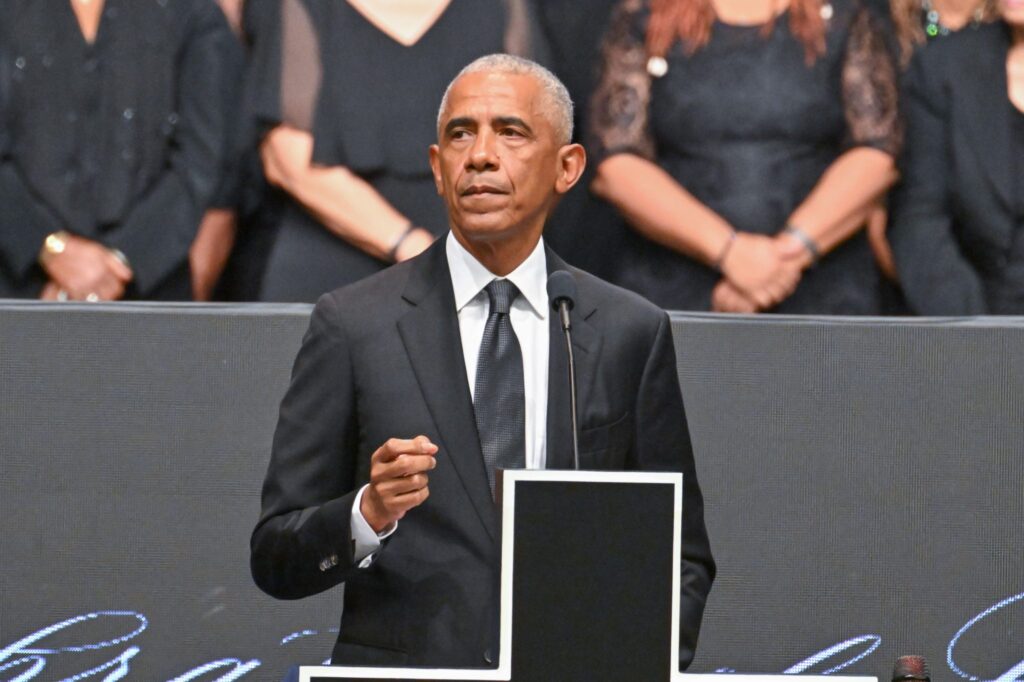
But the memorial quickly became part of a wider political debate after Obama and Biden used portions of their remarks to speak about the state of the country.
Obama warned that the United States is living through a moment in which democratic norms are under repeated strain. Reuters reported that he spoke of “daily assaults on democracy,” while other reports noted that he described Americans waking up to attacks on democratic institutions, the rule of law, and basic decency. Though he did not name Donald Trump directly, the target of the remarks was widely understood. Biden also struck a political note, saying the country was in “a tough spot” and criticizing the current administration’s values.
Many people in the crowd welcomed those comments, but not everyone believed the memorial was the right place for them.
The strongest public criticism came from Jesse Jackson Jr., who spoke the following day during a more private memorial at Rainbow PUSH Coalition headquarters in Chicago. There, he openly rebuked the former presidents, saying he had listened “for several hours to three United States presidents who do not know Jesse Jackson.” He argued that his father’s life and message were never meant to fit neatly inside either Democratic or Republican politics, but were rooted instead in a consistent moral commitment to “the least of these” and to people who were marginalized, dispossessed, and disrespected.
That criticism did not come entirely out of nowhere. After Jackson’s death, Jesse Jackson Jr. had already urged attendees to keep overt politics out of the homegoing services, saying people of all political beliefs were welcome so long as they came in a spirit of respect. His point was that Rev. Jackson’s life was broad enough to speak to the full American experience, and that mourners should not reduce that legacy to a partisan stage.
So far, there has been no public response from Obama or Biden to Jackson Jr.’s remarks.
The memorial also unfolded against the backdrop of another controversy. On the day Jackson’s death was announced, Trump issued a tribute on Truth Social that praised Jackson while also taking a swipe at Obama, claiming Jesse Jackson “could not stand” him. Multiple outlets described that claim as false or unsupported, and it quickly became another example of how even Jackson’s death was pulled into the country’s ongoing political battles.
In the end, that may be what makes the dispute so striking. Jesse Jackson spent decades forcing America to confront inequality, injustice, and political hypocrisy. Even in death, he remains powerful enough to draw presidents, stir debate, and expose the tension between public tribute and political messaging.
For some mourners, the speeches reflected the very kind of moral urgency Jackson embodied. For others, especially his son, they crossed a line and shifted attention away from the man they had come to honor.
Either way, the reaction made one thing unmistakably clear: Jesse Jackson’s legacy is still not quiet, settled, or easy. It is still being argued over because it still matters.



0 Comments